
Executive summary
REDATA (Brazil's Special Taxation Regime for Data Center Services) was designed to tackle a structural disadvantage: the high tax burden on data center equipment, especially imported assets with no equivalent domestic production. In exchange, it requires domestic market supply, sustainability, energy from renewable or low-emission sources, very low water use, R&D investment and transparency.
| Indicator | Value |
|---|---|
| Federal taxes with suspension | 4 (PIS/Pasep, Cofins, IPI and Import Tax) |
| R&D on eligible purchases | 2% (1.6% in the North/Northeast/Center-West regions) |
| Effective supply to the domestic market | 10% (8% in the North/Northeast/Center-West regions) |
| Maximum WUE | 0.05 L per kWh of IT energy, measured annually |
The value thesis:
- CAPEX: suspension of PIS/Pasep, Cofins, PIS/Cofins-Import, IPI and Import Tax on eligible goods destined for fixed assets. Once conditions are met, the suspension converts into a zero rate.
- Scope: the text covers installation, expansion and modernization. It includes cloud, HPC, AI training and inference within the definition of data center services.
- Chain: domestic manufacturers contractually tied to the project can seek co-qualification, extending the effect to components used in manufacturing the good delivered to the beneficiary.
- Geography: the North, Northeast and Center-West regions get a 20% reduction in domestic-supply and R&D commitments, creating an additional locational advantage.
- Flexibility: the domestic market obligation can be met through sale, free assignment to STIs or public bodies, or replaced by an additional 10% R&D investment.
- Risk: the benefit is not an unconditional discount. Non-compliance can require taxes to be paid from the triggering event, plus interest and fines, suspend new purchases and reach the economic group.
The right decision before presidential sanction
Mature projects should prepare a readiness dossier, but condition purchase orders on the law taking effect, on regulation, on the list of eligible goods and on approval of qualification. Getting ahead on engineering, contracts, tariff classification, energy documentation and water metering builds speed; getting ahead on the actual purchase can eliminate the benefit.
Executive verdict: High potential for projects intensive in imported hardware and able to meet sustainability and R&D requirements. The value drops when the taxes would be fully recoverable as credits, when the project is mostly civil works or real estate, or when the remaining validity window is short.
From the provisional measure to the approved text
The legislative history matters because part of the market still cites Provisional Measure (MP) 1,318/2025 as if it were in force. It lost effect on February 25, 2026. The current basis is Bill (PL) 278/2026, approved in final wording by Congress, together with Complementary Bill (PLP) 74/2026 for tax compatibility.
| Milestone | Effect |
|---|---|
| 09/17/2025 | MP 1,318 creates REDATA with temporary force of law |
| 02/25/2026 | The MP's validity ends without conversion into law |
| 2026 | PL 278 re-establishes the regime as a bill |
| 09/01/2026 | The Senate approves PL 278 and its final wording |
| 09/03/2026 | The Senate approves PLP 74 by 66 votes to 0 |
| 09/04/2026 | The enrolled bills are sent for presidential sanction |
| Until 09/25/2026 | Constitutional deadline for sanction or veto |
| Afterward | Publication, regulation, goods/service-code rulings and qualification |
Timeline built from official Congress and Senate pages. MP 1,318/2025 is listed as no longer in effect; PL 278/2026 and PLP 74/2026 are listed as awaiting presidential sanction.
What changed in the approved version
- Express inclusion of modernization, extending the regime beyond installation and expansion.
- Replacement of "capacity" with effective supply in the 10% obligation, measured by the ratio between domestic and total revenue from the benefited services.
- Energy from renewable or low-emission sources, a concept still pending regulation.
- Import Tax restricted to goods with no equivalent domestic production, per an act of the Executive branch.
- Obligation to publish a public sustainability report with WUE, energy sources and other indicators.
- Preservation of the 0.05 L/kWh WUE limit and of the R&D and domestic-market counterparts.
REDATA's legal architecture
The regime operates on four layers: eligible project, qualified legal entity, goods defined by the Executive branch, and conversion of the suspension into a zero rate after the asset is capitalized and requirements are met. If one layer fails, the gain can turn into a liability.
| Layer | Control question | Expected evidence |
|---|---|---|
| Project | Is it installation, expansion or modernization in Brazil? | Memorandum, schedule, scope and location |
| Beneficiary | Does the company provide data center services and is it not under Simples? | Tax ID, contracts, service classification, tax compliance and federal debt registry |
| Goods | Is the item on the list and will it become a fixed asset? | Tariff code, technical description, invoice/import declaration and asset ledger |
| Import | Is there equivalent domestic production? | Classification per act of the Executive branch |
| Counterparts | Are domestic market, energy, WUE, R&D and reporting requirements met? | Measurements, contracts, reports and audit |
| Conversion | Have the conditions to zero out the taxes been satisfied? | Conclusive dossier and approval trail |
Suspension is not immediate exemption
On purchase or import, payment is suspended. For the qualified entity, conversion into a zero rate depends on the good being capitalized as a fixed asset and on meeting sustainability, energy, WUE and R&D requirements. The 10% obligation has its own penalty regime. For the co-qualified entity, conversion happens after completing the sale and delivering the manufactured product to the qualified entity.
The economic event that should drive the project
The relevant date is not just the contract signature. Import, invoice issuance, customs clearance, delivery, asset capitalization and proof of counterparts must be synchronized. The contract should provide for a suspensive condition, risk allocation, tax documentation and consequences of delay or loss of qualification.
Who can access it
A legal entity that carries out an installation, modernization or expansion project of data center services in Brazilian territory and meets the legal commitments can be qualified. An industrial company that supplies ICT products for the qualified entity's asset can be co-qualified, provided a contractual link exists.
Qualified entity
- Legal entity responsible for the project and for providing the data center services.
- Good standing with federal taxes and no entry in the federal debt registry.
- Not under the Simples Nacional regime.
- Project in Brazil, with assets destined for the provider's fixed assets.
- Cumulative commitments on domestic market, sustainability, energy, water and R&D.
Co-qualified entity
- Legal entity under contract to supply an ICT product it manufactures, either on its own or on commission.
- Benefit restricted to the components used in the product that will be incorporated into the qualified entity's asset.
- Co-qualification ends if the contractual link is terminated.
- Conversion of the suspension to zero after the sale and delivery to the qualified entity.
Structures that require caution
| Structure | Critical issue |
|---|---|
| Corporate data center for own use | The wording refers to service provision; pure captive use should not be presumed eligible. |
| PropCo owning the building and OpCo operating it | The benefited asset must be on the qualified provider's fixed-asset ledger; standalone lease contracts may not suffice. |
| Client equipment hosted in colocation | If the asset belongs to the client, it must be checked who the beneficiary is and who actually provides the covered service. |
| Leasing, sale-and-leaseback or transfer | Disposal before conversion may require paying taxes, interest, fines and normal sale taxation. |
| Consortium or special-purpose entity | Each tax ID, contractual role, asset ownership and tax flow must be validated under the regulation. |
Which services are covered
The legal definition is broad and oriented toward infrastructure and computing resources dedicated to storing, processing and managing data and digital applications. The text explicitly mentions cloud computing, HPC, AI training and inference. Final classification will depend on an act of the Executive branch under the services-code system.
| Model | Classification reading | Priority |
|---|---|---|
| Colocation and hosting | Potentially covered when integrated into data center service provision and the qualified project. | High |
| Cloud IaaS/PaaS | Cloud computing appears expressly in the definition. | High |
| HPC | High-performance computing appears expressly. | High |
| AI factory / GPU cloud | AI model training and inference appear expressly. | High |
| Storage and backup | Data storage and management are part of the core definition. | High |
| Edge data center | May be covered, subject to the project, the services code and the same counterparts. | Medium |
| Pure telecom | Connectivity without a data center service is not automatically included. | Low |
| Real-estate construction | Civil works are not a data center service nor ICT goods by themselves. | Low |
"Priority" indicates screening potential, not guaranteed qualification.
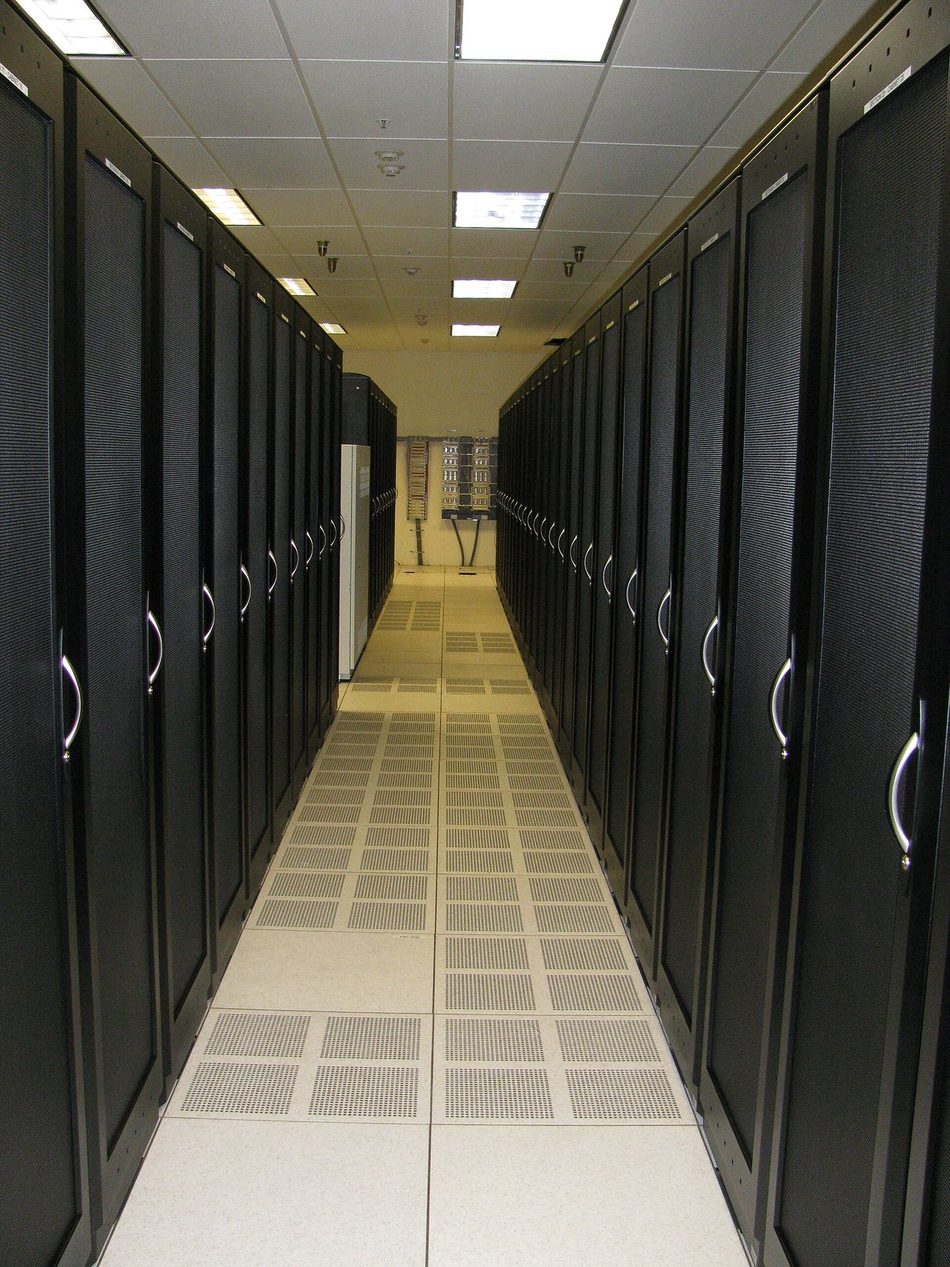
Opportunity for AI and HPC
The express mention of training and inference reduces conceptual uncertainty for GPU clusters, low-latency networks and high-performance storage. The tax gain, however, will depend on the list of eligible goods. GPUs, servers, switches, storage, racks, UPS units, chillers, CDUs and liquid-cooling components should not be treated as eligible before the specific act is issued.
The four tax benefits
The text suspends federal taxes on domestic purchases and imports of ICT products listed by the Executive branch. The value is not a single rate: it results from the combination of the good's origin, tariff code, IPI, Import Tax, credit regime and the structure of the operation.
| Tax | Operation | Direct advantage | Key limit |
|---|---|---|---|
| PIS/Pasep and Cofins | Domestic sale | Avoids cash outlay on the eligible purchase | Effect expected only through 12/31/2026 |
| PIS/Pasep-Import and Cofins-Import | Import | Reduces cash and tax cost of entry | Effect expected only through 12/31/2026 |
| IPI | Import or industrial output | Suspension and later zero rate | Exception for goods manufactured in the Manaus Free Trade Zone; effect through 12/31/2026 |
| Import Tax | Import | Can strongly reduce landed cost | Only with no equivalent domestic production and on the list |
Financial advantage versus economic advantage
When PIS/Cofins or import taxes would generate recoverable credits, part of the benefit is about working capital and timing, not permanent cost. When the credit is restricted, slow to be monetized or becomes an accumulated balance, the exemption can actually reduce economic CAPEX. The business case should separate: tax definitively avoided, tax merely deferred, credit that will cease to exist, financial cost and compliance cost.
The less obvious advantages
- Import on behalf and by order of a third party, allowing the use of a trading company or specialized structure without automatically losing the suspension.
- Once edited, the list of goods can only be changed to add new items, which tends to protect projects against sudden administrative removal of already-listed equipment.
- Co-qualification can carry the benefit into the domestic industrial chain and reduce the price of the final product delivered to the qualified entity.
- Modernization allows the regime to be aligned with IT's short obsolescence cycle, not just greenfield campuses.
- The text gives explicit treatment to AI and HPC, reinforcing sector-level predictability.
How to build the eligible CAPEX
Eligible CAPEX should not be estimated from a generic list of "data center equipment." It must be built from an item-by-item matrix connecting tariff code, the act's description, project, ownership, fixed asset, supplier and tax document.
| Family | Examples to map | Treatment in this edition |
|---|---|---|
| Compute | Servers, accelerators, GPUs, CPUs, memory and boards | Candidate; wait for the list |
| Storage | Arrays, controllers, disks, libraries and appliances | Candidate; wait for the list |
| Network | Switches, routers, optics, NICs, cables and transceivers | Candidate; wait for the list |
| Power | UPS, PDU, batteries, busbars and conversion | Uncertain; depends on the ICT concept and the list |
| Cooling | Chillers, CRAC/CRAH, CDU, dry coolers and pumps | High uncertainty; do not presume |
| Security and management | DCIM, BMS, KVM, sensors and control | Depends on the list and function |
| Construction | Land, structure, flooring, electrical room and civil works | Outside the benefit unless expressly stated |
| Services | Design, installation, maintenance, licenses and support | Not ICT goods for the asset; analyze separately |
Minimum dossier per item
- Internal code, commercial description, manufacturer, model and technical specification.
- Suggested tariff code, classification memo and any binding ruling.
- Literal match with the Executive branch's act and functional justification.
- Origin, supplier, Incoterm, customs value and applicable rates.
- Cost center, REDATA project, installation site and asset tag number.
- Proof of capitalization into the qualified entity's fixed assets.
- Link to the co-qualified entity's contract, when applicable.
- Suspended taxes, expected conversion date and supporting documents.
Full catalog of advantages
The advantages can be organized into seven blocks. The first three flow directly from the tax design; the rest are strategic effects that depend on project execution and the market.
| Block | Extractable advantages |
|---|---|
| 1. Tax | Lower initial outlay; potential reduction in asset cost; lower financing cost during construction; improved return on capital. |
| 2. Customs | Import Tax suspended on goods with no equivalent domestic production; import on behalf of a third party; batch and schedule planning. |
| 3. Industrial | Co-qualification; integration with domestic manufacturers; benefited components; potential local assembly and customization. |
| 4. Technological | More frequent refresh; AI/HPC clusters; higher density; next-generation networking and storage, subject to the list of goods. |
| 5. Commercial | More local capacity; lower latency; sovereign offerings; more competitive prices; possibility of ceding capacity to public ecosystems. |
| 6. Regional | Reduced counterparts in the North/Northeast/Center-West; access to renewable energy; proximity to cables, digital hubs and development programs. |
| 7. ESG and innovation | Clean/low-emission energy; low WUE; structured R&D; transparency; reputation and potential access to ESG-linked capital. |
The competitive advantage that never shows up on the invoice
A project that uses the exemption to raise density, efficiency and sellable capacity can combine four effects: lower unit CAPEX, lower cost per workload, a shorter delivery cycle and local high-performance supply. That combination is worth more than simply capturing the tax break while keeping the same architecture.
The limit of the capture
REDATA does not guarantee demand, grid connection, capacity in the national interconnected system, environmental licensing, water, fiber, land, credit or a competitive state/consumption-tax rate. The tax advantage only becomes a return when the project removes these bottlenecks in parallel.
The regional advantage
When the qualified establishment is located in the North, Northeast or Center-West — including areas covered by regional development agencies — the domestic-market and R&D commitments are reduced by 20%. That is a reduction of the commitment, not a 20-percentage-point increase.
| Commitment | General rule | North/Northeast/Center-West | Example on R$ 100 million |
|---|---|---|---|
| Domestic supply | 10% | 8% | 8% effective-supply target |
| Mandatory R&D | 2% | 1.6% | R$ 1.6 million |
| Alternative to domestic supply | 10% additional R&D | Text does not expressly reduce §6 | Validate under the regulation |
How to use the advantage without falling into artificial arbitrage
The location decision must reflect real operations: establishment, assets, service provision, energy, staff, connectivity and site metrics. Formally splitting a project to obtain the reduction without economic substance increases tax and regulatory risk.
The case for Fortaleza and other regional hubs
Benefited regions can combine a lower commitment, renewable energy, international connectivity and local ecosystems. For Fortaleza, for example, the presence of submarine cables can support low international latency; for other hubs, energy and land availability can be decisive. REDATA improves the equation but does not replace studies on grid connection, curtailment, redundancy, water, licensing and demand.
At least 40% of the regime's R&D resources must fund programs and projects in the North/Northeast/Center-West regions and their development-agency areas, reinforcing the formation of a regional ecosystem.
The three routes to the domestic commitment
The project must make at least 10% of the effective supply installed under the benefit available to the domestic market. The text creates three economic routes: domestic sale, free assignment and replacement with additional R&D. The choice should be made in the business model, not on the eve of an audit.
| Route | How it works | When it tends to make sense | Cost/risk |
|---|---|---|---|
| Sale in Brazil | Domestic revenue divided by total revenue from the benefited services | Operators with a local pipeline and cloud/colo/HPC contracts | Demand risk and revenue classification |
| Free assignment | Capacity to STIs or public bodies, with a regulatory multiplier factor | Projects with an ecosystem strategy, public AI and innovation | Annual independent audit and cost of the capacity |
| Additional R&D | Replaces the commitment with extra investment of 10% on benefited products | Export-oriented projects or economic use with no domestic demand | High outlay; regulatory rules and eligibility |
The idle-capacity trap
The portion reserved for the domestic market cannot be diverted to export or own use simply because domestic demand did not materialize. This requires product, price, channel, SLA and a commercial pipeline from the start. The R&D alternative can be economically better than keeping expensive, unmonetized capacity, but it must be chosen in advance and validated under the regulation.
Financial measurement of the commitment
The enrolled bill measures commercialization by the ratio between gross domestic revenue and total gross revenue from services installed with the benefit. Projects must break revenue down by site, asset, service, client origin and economic destination. Global contracts, bundles, intercompany deals and resale require a defensible allocation policy.
Energy and sustainability
The entire electricity demand must be met by supply contracts or self-production from renewable or low-emission sources. Brazil has a natural advantage: in 2025, 86.8% of the electricity mix was renewable, according to EPE (Brazil's Energy Research Office). That improves the competitive baseline, but does not by itself prove the contractual origin required for a project.
| Indicator | Value | Base year |
|---|---|---|
| Renewables in the electricity mix | 86.8% | 2025 |
| Wind + solar in national generation | 26.4% | 2025 |
| Emissions from the power sector | 64.8 kg CO2e/MWh | 2025 |
Source: National Energy Balance 2026, base year 2025, EPE.
What to prepare
- Contracting strategy: free-market contracts, PPAs, self-production, local generation and environmental-attribute backing.
- Temporal and geographic matching between consumption and generation, per the future regulation.
- Treatment of losses, backup, emergency generation, batteries and shared consumption.
- Energy certificates, metering, reconciliation and chain of custody for the attributes.
- Scenario for availability, curtailment, transmission, connection and long-term price.
- Regulatory definition of "low emission," especially for natural gas, nuclear and hybrid sources.
Extractable operational advantages
Long-term contracts can reduce volatility, support financing and offer environmental traceability to clients. Self-production can bring generation closer to load and create a hedge, but it brings CAPEX, regulatory risk and operational exposure. The best structure is the one that meets the regulation and reduces total risk-adjusted cost, not the one that simply maximizes certificates.
WUE of 0.05 L per kWh
The proposed limit is very demanding: at most 0.05 liter of water per kWh of IT energy, measured annually. In simple terms, each 1 MWh of IT energy allows up to 50 liters of water consumption under the indicator, per the methodology to be regulated.
| Annual IT energy | Maximum water at WUE 0.05 | Order of magnitude |
|---|---|---|
| 1 GWh | 50,000 L | 50 m³/year |
| 10 GWh | 500,000 L | 500 m³/year |
| 100 GWh | 5,000,000 L | 5,000 m³/year |
| 1 TWh | 50,000,000 L | 50,000 m³/year |
Illustrative calculation: annual water consumption in the numerator = WUE x annual IT energy. The measurement boundary will be defined by the regulation.
Design consequences
- Prioritize air cooling, dry coolers, closed loops and architectures that reduce evaporation on site.
- Liquid cooling does not automatically mean high water consumption: closed loops can transfer heat with little makeup water, while final heat rejection defines most of the consumption.
- Avoid evaporative cooling towers as the dominant solution without annual modeling that demonstrates the limit.
- Measure cooling water, humidification, cleaning, on-site generation and shared uses separately.
- Calibrate meters, define the boundary, address leaks and reconcile volume with IT energy.
- Assess the water-energy trade-off: reducing water can raise PUE and electricity cost.
WUE is not PUE
PUE measures the data center's total energy divided by IT energy; WUE measures annual water consumed divided by IT energy. A project can have excellent WUE and worse PUE, or the reverse. The optimal project minimizes combined cost and impact within availability, climate and SLA constraints.
Turning research and development into a strategic asset
The R&D obligation equals 2% of the value of products acquired with the benefit, reduced to 1.6% for regionally benefited establishments. Treated merely as a cost, it erodes the gain. Integrated into the roadmap, it can fund efficiency, software, security, AI, cooling and supplier development.
Eligible partners
- Scientific, Technological and Innovation Institutions.
- Brazilian educational entities that are official or recognized by public authorities.
- State-owned, privately organized companies that maintain funds directed at technology-based companies.
- Qualified social organizations or autonomous social services with a federal management contract and activity in applied research, development and innovation.
- A private fund for centralizing contributions, as regulated.
R&D portfolio for data centers
| Theme | Possible project | Value indicator |
|---|---|---|
| Efficiency | PUE/WUE optimization, thermal control and digital twin | kWh and liters avoided |
| AI infrastructure | Scheduler, observability and GPU-cluster optimization | Utilization and cost per token |
| Storage | Tiering, compression, telemetry and resilience | Usable TB, latency and availability |
| Cybersecurity | Zero trust, detection and response in critical infrastructure | MTTD, MTTR and risk reduction |
| Energy | Batteries, flexibility, forecasting and demand response | MW shifted and cost avoided |
| Domestic supply chain | Firmware, integration, testing and supplier qualification | Local technological content |
| Talent | Labs and training tied to applied research | Professionals and prototypes |
Investment governance
Every project must have a technical plan, budget, eligible partner, intellectual property terms, goals, execution evidence, audit and an explicit link to priority programs. Generic sponsorship, commercial training or routine purchases should not be counted as R&D without a regulatory basis.
Six capture models
The same text generates different value depending on who buys the asset, who provides the service, where revenue comes from and the demand profile. The models below help choose the right thesis.
Greenfield colocation
Broad capture on listed equipment; plans for 10% domestic revenue; organizes energy and WUE by design. The gain is greater when hardware and technology infrastructure dominate CAPEX.
Modernization of an existing site
Upgrades compute, storage, networking and eligible systems. Requires separating new assets from the legacy base and demonstrating the modernization project. There is no retroactive benefit.
AI factory or GPU cloud
High potential due to the concentration of imported hardware with no domestic equivalent. Must prove service provision, domestic supply or additional R&D, and cooling compatible with WUE.
Regional cloud
Combines the regional benefit, lower latency and domestic sales. Can use R&D to build platform, automation, security and local capacity building.
Export-oriented campus
REDATA can reduce CAPEX, but the domestic reserve becomes a constraint. The company compares 10% local supply against 10% additional R&D and possible export regimes, without assuming they can be stacked.
Co-qualified manufacturer or integrator
Suspends taxes on components used in the manufactured product delivered to the qualified entity. Requires a contract, traceability, input segregation and proof of delivery.
Economic simulations
The simulations below do not calculate a real project. They show how to structure the analysis and why the nominal rate should not be confused with net gain.
Scenario A — R$ 100 million domestic purchase
| Component | Illustrative assumption | Value |
|---|---|---|
| Base of eligible goods | 100% listed and capitalized | R$ 100.00 mi |
| Gross PIS/Cofins | 9.25%, for order of magnitude only | R$ 9.25 mi |
| IPI | 5% hypothetical | R$ 5.00 mi |
| Gross suspended taxes | Before credits and item-specific bases | R$ 14.25 mi |
| Mandatory R&D | 2% of the benefited base | R$ 2.00 mi |
| R&D in North/Northeast/Center-West | 1.6% of the base | R$ 1.60 mi |
Net economic gain depends on credits that would be recoverable, compliance cost, cost of domestic capacity, timing and risk. The real IPI depends on the product.
Scenario B — import with R$ 100 million customs value
| Component | Illustrative range | Note |
|---|---|---|
| Import Tax | 0% to 16% | Only if the good is listed and has no equivalent domestic production |
| PIS/Cofins-Import | Use the specific rate | Incidence and credit vary by item and regime |
| IPI on import | 0% to 15% | Tariff code and Manaus Free Trade Zone protection can change the result |
| Logistics and add-ons | Not automatically zeroed | Freight, insurance, merchant-marine fee, other charges and expenses follow their own analysis |
| R&D | 2% or 1.6% | Calculated on products acquired with the benefit |
Scenario C — exporter with no domestic market
On R$ 100 million in benefited products, replacing the domestic commitment would require an additional R&D investment of R$ 10 million, on top of the ordinary R&D of R$ 2 million. The economic decision compares this outlay against margin, opportunity cost and the risk of the capacity reserved for Brazil. The regional reduction under §7 expressly reaches the commitments in items I and V; the text does not expressly reduce the additional amount under §6. This point should be confirmed under the regulation.
Decision formula
| Line | Calculation |
|---|---|
| Gross tax benefit | Suspended taxes that will convert to zero |
| (−) lost credits | Credits that would exist without REDATA and would actually be monetized |
| (+) cash value | Financial cost avoided between purchase and credit recovery |
| (−) counterparts | R&D, domestic supply, audit, energy, water and reporting |
| (−) expected risk | Probability of assessment x taxes, interest, fines and operational impact |
| (=) net value | Effect on NPV, IRR, payback and cost per MW/server/workload |
Building the right business case
REDATA must be modeled at the level of item, time and condition. A spreadsheet that applies "up to 30%" to the entire CAPEX tends to overstate value, because it mixes civil works, services, unlisted items, tax credits and benefits with different validity periods.
Ten minimum inputs
- Total CAPEX and the share of potentially listed ICT goods.
- Domestic purchases versus imports and their respective schedules.
- Tariff code, Import Tax, IPI, PIS/Cofins and per-item tax bases.
- Tax credits that would be recoverable in a scenario without REDATA.
- Expected dates for qualification, purchase, capitalization and conversion to zero.
- Ordinary R&D, substitute R&D and management costs.
- Cost and revenue of domestic supply, including idle capacity.
- CAPEX/OPEX for WUE, energy, metering, audit and reporting.
- Cost of capital and FX effect.
- Scenarios for veto, regulatory delay, a restricted list and the tax transition.
Mandatory scenarios
| Scenario | Premise | Use |
|---|---|---|
| Base | Full sanction, compatible list and qualification on schedule | Central decision |
| Conservative | Restricted list, delay and partially recoverable credits | Cash protection |
| Stress | Veto, late regulation or non-compliance | Exposure limit |
| Regional | Commitments of 8% and 1.6% | Compare locations |
| Exporter | Additional R&D of 10% | Compare the domestic reserve |
| Post-2026 | PIS/Cofins extinguished and IPI nearly zeroed | Assess the remaining weight of Import Tax |
The tax-reform window
The most sensitive point of the enrolled bill is temporal. The regime lasts five years, but the benefits for PIS/Pasep, Cofins and IPI only take effect through December 31, 2026. Starting in 2027, PIS and Cofins are extinguished and IPI is reduced to zero for almost all products.
Implication: Without additional legislation addressing the new consumption tax (CBS), the relevant federal benefit after 2026 tends to concentrate on Import Tax for goods with no equivalent domestic production. The sanction and the regulation need to be read together with the tax-reform legislation.
Why there may still be value after 2026
- Import Tax may remain material on servers, accelerators, networking gear and listed components.
- Co-qualification and predictability of the list can help organize the industrial chain.
- The service definitions and the sustainability agenda can guide sector policy and future projects.
- Large-scale importing projects may see relevant savings even with the benefit concentrated on Import Tax.
Why the timeline needs governance
The window through 12/31/2026 may be short for sanctioning, regulating, publishing lists, qualifying companies, contracting, manufacturing, importing and capitalizing assets. The triggering event should not be altered, documents should not be anticipated, and operations should not be simulated. The defensible path is to map the real schedule, use contractual conditions and recognize when the 2026 benefit is simply not capturable.
What REDATA does not deliver
A good publication on incentives needs to show the negative perimeter too. The approved text does not create a general data center tax exemption and does not solve every component of TCO.
| Item | Don't presume | Action |
|---|---|---|
| State/municipal VAT-type taxes | The federal benefit does not zero out state or municipal taxes | Model state and municipality separately |
| New consumption tax (CBS) | Does not appear in the list under approved Art. 11-C | Track the complementary legislation |
| Energy and grid charges | There is no automatic discount on tariffs, transmission/distribution charges or demand | Structure contracting and connection |
| Civil works | Land, construction and installations are not automatically ICT goods | Segregate the budget |
| Services and software | Licenses, deployment and maintenance are not automatically included | Classify contracts |
| Corporate income tax | REDATA does not exempt operators from it | Model profit taxation |
| Financing | The law does not guarantee credit or funding | Negotiate with development banks, banks and the market |
| Permits | Does not replace environmental licensing, connection, water, construction and telecom permits | Execute the regulatory track |
| Demand | The domestic reserve does not create a customer | Develop a pipeline and product |
| Domestic-equivalent finding | A zero Import Tax rate does not automatically apply to any imported item | Validate the act and the equivalence finding |
Stackable incentives
Cumulation with export-processing zones, regional incentives, customs regimes, R&D tax incentive laws, or state or municipal benefits must be analyzed benefit by benefit. Amendments dealing with export-processing zones and other topics are not part of the enrolled text of PL 278/2026. There is no general authorization to stack incentives on the same triggering event.
Compliance by design
The company needs to run two connected ledgers: the ledger of the benefited asset and the ledger of the counterparts. Both must reconcile accounting, tax, customs, engineering, energy, water, contracts, revenue and R&D.
| Domain | Key control | Frequency |
|---|---|---|
| Tax | Suspended tax by document, item, tariff code and legal basis | Per transaction |
| Asset | Tag, location, project, capitalization and movement | Continuous |
| Revenue | Domestic/total ratio per benefited service | Monthly |
| Energy | Consumption, source, contract, certificates and reconciliation | Monthly/annual |
| Water | Meters, boundary, consumption and IT energy for WUE | Hourly/monthly/annual |
| R&D | Base, 2%/1.6%, partner, project, payment and results | Quarterly |
| Supplier | Co-qualification, components, batch and delivery | Per contract/batch |
| Sustainability | Indicators and public report | Annual |
| Governance | Committee, approvals, exceptions and remediation | Monthly/quarterly |
Three critical reconciliations
- Purchase to asset: invoice or import declaration → eligible item → asset registration → location → project.
- Benefit to commitment: benefited value → R&D base → contributions → domestic capacity/revenue → reports.
- Operation to sustainability: IT energy → total energy → water → energy origin → annual publication.
Owners
The sponsor must be an executive, with operational leadership shared across Tax, Legal/Regulatory, Engineering, Operations, Energy, Sustainability, Procurement, Customs, Accounting, Commercial and R&D. Internal audit should test samples before external audit or inspection.
Risks and penalties
The worst mistake is recognizing the benefit in the business case without provisioning for the obligation to prove future conditions. The enrolled bill provides for recovering taxes from the triggering events, with interest and late-payment fines, plus ex officio assessment and a specific penalty for the domestic-supply commitment.
| Failure | Provided consequence | Mitigation |
|---|---|---|
| Sustainability, energy, WUE or R&D | Payment of suspended taxes, interest and fine from the triggering event | Technical gates and continuous evidence |
| Co-qualified entity doesn't complete sale/delivery | Payment of suspended taxes with interest and fine | Contract, segregation and acceptance |
| Sale to a non-qualified entity before conversion | Pay suspended amounts, interest, fine and normal sale taxes | Asset blocking and tax approval |
| Non-payment | Ex officio assessment and the penalty under Art. 44 of Law 9,430 | Self-reporting and contingency management with advisors |
| Insufficient domestic supply | Suspension for new purchases | Dashboard and commercial plan |
| Failure to remedy within 180 days | Cancellation of qualification | Immediate remediation plan |
| Cancellation | The company and the group can only return after two years | Group-level governance |
Appeal without suspensive effect
The administrative decision to suspend or cancel allows for an appeal, but without suspensive effect. This means the operation should not depend on the expectation of reversing the decision while continuing to acquire goods with the benefit.
Economic-group risk
During suspension, the company and the economic group it belongs to cannot enjoy the regime. Upon cancellation, the two-year bar also reaches the group. Governance needs to consolidate tax IDs and prevent one site from compromising the entire portfolio.
12-step capture playbook
Safe capture begins before the first invoice and ends after the annual proof of compliance. The goal is to convert a tax promise into defensible documentation and measurable economic value.
- Define the thesis: project, service, location, capacity, clients and assets.
- Build the baseline: cost without REDATA, credits, taxes, schedule and return.
- Map eligibility: tax ID, regime, good standing, federal debt registry, service code and contractual role.
- Classify the bill of materials: item, tariff code, origin, domestic equivalent, list and fixed-asset status.
- Choose the domestic route: sale, free assignment or additional R&D.
- Close energy: contracts, self-production, attributes and reconciliation.
- Validate WUE: annual simulation, technology, metering plan and safety margin.
- Structure R&D: partner, program, budget, IP, milestones and evidence.
- Contract the chain: qualification and co-qualification conditions, documents and indemnity.
- File and wait: follow the regulation and don't presume retroactivity.
- Execute with gates: release purchases only after tax and regulatory checks.
- Convert and maintain: capitalize, prove, publish, audit and monitor risks.
Golden rule: No purchase order should use REDATA as a tax premise without four documented confirmations: the law in force, the applicable regulation, the good on the list, and valid qualification/co-qualification on the date of the triggering event.
90-day readiness plan
Even before regulation, it is possible to shorten capture time without assuming the benefit. The plan below produces options, not premature triggering events.
| Period | Deliverables |
|---|---|
| Days 1-15 | Sponsor; committee; legal reading; project inventory; purchase schedule; map of tax IDs and standing. |
| Days 16-30 | Preliminary bill of materials; tariff codes; suppliers; origin; assets; tax scenario with/without REDATA; credit map. |
| Days 31-45 | Domestic-market model; pipeline; assignment option; comparison with additional R&D; regional thesis. |
| Days 46-60 | Energy study; annual WUE; cooling architecture; metering plan; sustainability gaps. |
| Days 61-75 | R&D portfolio, eligible partners, contracts, IP policy, audit and evidence. |
| Days 76-90 | Qualification dossier; control matrix; contract clauses; purchase gates; board decision. |
Update triggers
- Sanction or veto of PL 278/2026 and PLP 74/2026.
- Publication of the implementing decree.
- Acts on service codes, product lists and domestic-equivalent criteria.
- Tax authority procedure for qualification and co-qualification.
- Rules on energy, sustainability, WUE, R&D, the fund and audits.
- Legislation addressing CBS and the post-2026 transition.
Board checklist
The board does not need to approve every tariff code, but it must understand the value, the dependencies, the maximum exposure and the owners. A project should only advance as "REDATA-ready" once the answers below are evidenced.
| Question | Go | No-go / Condition |
|---|---|---|
| Is the benefit in force and regulated? | Law, decree and acts published | Wait; don't recognize the saving |
| Are the project and the tax ID eligible? | Consistent legal opinion and dossier | Restructure or drop the premise |
| How much of CAPEX is actually listed? | Classified, auditable bill of materials | Redo the business case |
| Does qualification precede the triggering event? | Schedule with margin | Condition the purchase |
| Does energy meet 100%? | Contracts and sufficient proof | Close the energy gap |
| Does WUE have a safety margin? | Annual model + metering | Review cooling/location |
| Is the domestic route profitable? | Pipeline or approved assignment/R&D | Redesign capacity |
| Is R&D executable? | Partner, program and governance | Don't use the benefit |
| Is the loss bearable? | Stress case and guarantees | Limit exposure |
| Is the group protected? | Consolidated controls | Fix governance |
Recommended decision by stage
Before sanction: approve only readiness and reversible expenses. After sanction and before the regulation: complete engineering and conditional contracts. After the regulation and the list: recalculate the business case. After qualification: release purchases gate by gate. After capitalization: keep evidence until conversion and throughout the required period.
Frequently asked questions
Is REDATA already in effect? Not as of 09/11/2026. PL 278/2026 and PLP 74/2026 are awaiting presidential sanction. Actually using the benefit will still depend on regulation, implementing acts and qualification.
Is the savings always 30%? No. The legislative report mentions a potential reduction of up to 30% in initial investment, but each project depends on the applicable rates, listed goods, credits and counterparts.
Will all data center equipment be exempt? No. Only products listed by an act of the Executive branch and destined for the qualified entity's asset. For Import Tax, no equivalent domestic production is required.
Can an existing data center use it? The final text includes modernization. Already-purchased assets do not get a retroactive benefit; the new modernization project and future purchases must meet the rules.
Do cloud and AI qualify? The definition cites cloud, HPC, AI training and inference. The service will still need to be classified under the services-code system.
Can a company under the Simples regime join? No. The text bars companies that opt into the Simples Nacional regime.
Is it mandatory to sell 10% domestically? There are three paths: domestic sale, qualified free assignment, or replacement with an additional 10% in R&D, per future rules.
Does the region reduce everything by 20%? No. The text reduces the commitments under items I and V: domestic supply and ordinary R&D. Other requirements remain.
Is natural gas allowed? The enrolled bill uses "renewable or low-emission sources." Classification of sources and criteria will depend on the regulation; it should not be assumed that any gas-fired generation qualifies.
Can the 0.05 WUE be an annual average? The text provides for annual measurement. The methodology, boundary, water sources and treatment of contingencies will be regulated.
Can R&D be carried out in-house? The text requires projects under priority programs and in partnership with the listed entities. The exact form and the private fund will depend on the regulation.
Does the benefit cover energy? No. The energy source is a counterpart requirement; the text does not automatically reduce tariffs or grid charges.
Does it cover state VAT-type tax? No. The listed regime is federal. State incentives must be negotiated and analyzed separately.
Can I import through a trading company? The text allows import on behalf and by order of a third party, subject to qualification, documentation and regulation.
What happens if the asset is sold? Before conversion, selling to a non-qualified entity requires paying the suspended taxes, interest, fine and normal sale taxes.
Article-by-article legal matrix
| Provision | Operational content | Internal owner |
|---|---|---|
| Art. 11-A | Project, services, qualified entity, co-qualified entity, good standing, federal debt registry and Simples exclusion | Legal/Tax |
| Art. 11-B §1 I | 10% of effective supply to the domestic market | Commercial/Finance |
| Art. 11-B §1 II | Sustainability criteria and indicators | Sustainability |
| Art. 11-B §1 III | 100% of electricity demand from renewable or low-emission sources | Energy |
| Art. 11-B §1 IV | WUE ≤ 0.05 L/kWh with annual measurement | Engineering/Operations |
| Art. 11-B §1 V | 2% in R&D with qualified partners | Innovation/Tax |
| Art. 11-B §§2-6 | Sale, free assignment, audit, multiplier factor and substitute R&D | Commercial/R&D |
| Art. 11-B §7 | 20% reduction of commitments in the North/Northeast/Center-West | Strategy |
| Art. 11-B §§8-9 | Regulation, exclusion and private fund | Legal/R&D |
| Art. 11-B §§10-11 | Public report and possible repository | Sustainability |
| Art. 11-C | Taxes, operations, list of goods and conversion to zero | Tax/Customs |
| Arts. 11-D to 11-G | Tax recovery, sale and ex officio assessment | Tax/Legal |
| Art. 11-H | Suspension, 180 days, cancellation, appeal and group | Compliance |
| Art. 11-I | Destination of R&D and 40% regional minimum | Innovation |
| Art. 11-J | Five-year term and cutoff on 12/31/2026 for PIS/Cofins/IPI | Finance/Tax |
| Art. 4 of the Bill | Evaluation by the Ministry of Development, Industry, Commerce and Services and the Ministry of Finance | Institutional relations |
| Art. 5 of the Bill | Takes effect upon publication, if sanctioned | Legal |
Conclusion
REDATA can shift the economic frontier for data centers in Brazil, especially in AI, HPC, cloud and modernization intensive in imported equipment. Its best use is not buying the same infrastructure more cheaply; it is turning the tax savings into more capacity, density, efficiency, innovation and competitiveness.
The main direct advantage is the suspension of four groups of federal taxes and their conversion into a zero rate. The strategic advantage is broader: accelerating technology refresh, creating local supply, developing suppliers and using the Brazilian power grid as a differentiator. The regional advantage can make the North, Northeast and Center-West more competitive by reducing domestic-market and R&D obligations.
But the regime demands coherence. The asset needs to be in the right place, in the right company, at the right time. Energy needs to be provable. WUE needs to be measured. R&D needs to exist. Domestic revenue needs to add up. Transparency needs to be public. And the entire group needs to be protected against the failure of a single project.
As of September 11, 2026, the prudent decision is to prepare. Once there is presidential sanction, regulation, a list of goods and qualification, the decision becomes execution with gates. The winner will not be whoever applies the highest tax percentage in a spreadsheet; it will be whoever connects strategy, engineering, tax, commercial and evidence into a single management system.
Final message: REDATA should be treated as a program for transforming capital and capacity, not as a tax coupon. Safe capture is born in the design and ends in the proof.
Glossary
| Term | Definition |
|---|---|
| Fixed asset | A tangible good held for use in providing the service, recognized under applicable accounting and tax rules. |
| Self-production | Generation of energy for own consumption, through a direct or equivalent structure under sector rules. |
| Co-qualified entity | Industrial company under contract to supply an ICT product destined for the qualified entity's asset. |
| Qualified entity | Legal entity authorized by the tax authority to benefit from the regime for the eligible project. |
| HPC | High Performance Computing. |
| STI | Scientific, Technological and Innovation Institution. |
| Import Tax | Tax levied on imported goods. |
| IPI | Tax on Manufactured Products. |
| Services code (NBS) | Brazilian Nomenclature of Services, Intangibles and Other Transactions. |
| Tariff code (NCM) | Mercosur Common Nomenclature used to classify goods. |
| R&D | Research, development and innovation within the context of priority programs. |
| PPA | Power Purchase Agreement. |
| PUE | A data center's total energy divided by the energy consumed by IT equipment. |
| REDATA | Brazil's Special Taxation Regime for Data Center Services. |
| Suspension | Conditional non-payment; can convert into a zero rate or become due. |
| WUE | A data center's annual water consumption divided by annual IT energy, in L/kWh. |
| Manaus Free Trade Zone | A free-trade zone in the state of Amazonas with special tax treatment. |
Sources and references
Primary, official sources were prioritized. The links below let readers verify the text and track changes after this edition's closing date (September 11, 2026).
- Enrolled bill PL 278/2026 — Brazilian Federal Senate
- Legislative tracking of PL 278/2026 — Brazilian Federal Senate
- Report 176/2026 on PL 278/2026 — Brazilian Federal Senate
- Legislative tracking of PLP 74/2026 — Brazilian Federal Senate
- Provisional Measure 1,318/2025 — Office of the President of Brazil
- Tracking and end of MP 1,318/2025 — National Congress of Brazil
- Consumption Tax Reform — Brazilian Federal Revenue Service
- National Energy Balance 2026 — Energy Research Office (EPE)
- Water Usage Effectiveness — The Green Grid
- Law 10,865/2004 — Office of the President of Brazil
- Law 11,196/2005 — Office of the President of Brazil
- Complementary Law 214/2025 — Office of the President of Brazil
Method: reading of the enrolled bill sent for sanction; cross-checking against the legislative history and the prior provisional measure; analysis of each provision by benefit, condition, evidence and penalty; illustrative impact modeling; technical review of energy, water and operations. Cutoff date: September 11, 2026. A new edition is recommended after sanction and after each implementing act.